
Excessive Sweating: Causes, Treatment & When to Seek Help
Excessive sweating, medically known as hyperhidrosis, is a condition where the body produces more sweat than is required for normal temperature regulation. Unlike typical sweating caused by heat or exercise, hyperhidrosis can occur at rest, in cool environments, or without an obvious trigger.
It may affect areas such as the underarms, hands, feet, face, scalp, chest, or groin, and for many people, it can impact daily comfort, confidence, and quality of life. Hyperhidrosis is a recognised medical condition, and a range of management options may be discussed with a qualified health professional.
Causes of Excessive Sweating
Hyperhidrosis is generally classified into two main types: primary hyperhidrosis and secondary hyperhidrosis. Identifying the type is important when considering management options.
Primary Hyperhidrosis
Primary hyperhidrosis occurs without an identifiable underlying medical condition. It is thought to result from overactivity of the sympathetic nervous system, leading to excessive stimulation of sweat glands.
Key features:
- Usually begins in childhood or adolescence
- Often affects specific areas: Underarems (axillary hyperhidrosis) / Palms / Feet / Face or scalp
- May have a genetic component
- Episodes usually occur at least once per week
- Sweating can interfere with daily activities
- Does not usually occur during sleep
Secondary Hyperhidrosis
Secondary hyperhidrosis occurs as a result of an underlying medical condition, medication, or external factor. In these cases, addressing the underlying cause is an important part of management.
Common medical causes include:
- Thyroid disorders (overactive thyroid)
- Diabetes or low blood sugar
- Menopause and hormonal fluctuations
- Infections or fever
- Anxiety, stress, or panic attacks
- Heart or lung conditions
Medications that may cause sweating:
- Certain antidepressants
- Some pain medications
- Hormone therapies
- Certain diabetes medications
Environmental and lifestyle triggers:
- Hot or humid weather
- Spicy foods
- Caffeine
- Alcohol
- Intense physical activity
Sweating that affects large areas of the body, occurs during sleep, or begins suddenly in adulthood is more suggestive of secondary hyperhidrosis and should be medically assessed.
Symptoms and Signs of Excessive Sweating
You may be experiencing excessive sweating if:
- You sweat even in cool conditions
- Sweat soaks through clothing or drips from hands or face
- You avoid certain fabrics or colours due to visible sweating
- Sweating causes embarrassment or impacts social or work situations
- You experience skin irritation, odour, or recurrent infections due to moisture
These signs may indicate sweating beyond what is considered normal and may warrant discussion with a healthcare professional.
At-Home or Behavioural Treatment Options
At-home strategies include:
- Using clinical-strength antiperspirants
- Wearing lightweight, breathable fabrics such as cotton or bamboo
- Avoiding known triggers, including: spicy foods / alcohol / caffeine
- Managing stress through relaxation techniques or mindfulness
- Wearing moisture-wicking socks and footwear
- Keeping a diary to identify personal triggers
These measures may help manage symptoms but may not be sufficient for people with primary hyperhidrosis.
Professional Treatments
For persistent or severe sweating, a healthcare professional may discuss medical management options.
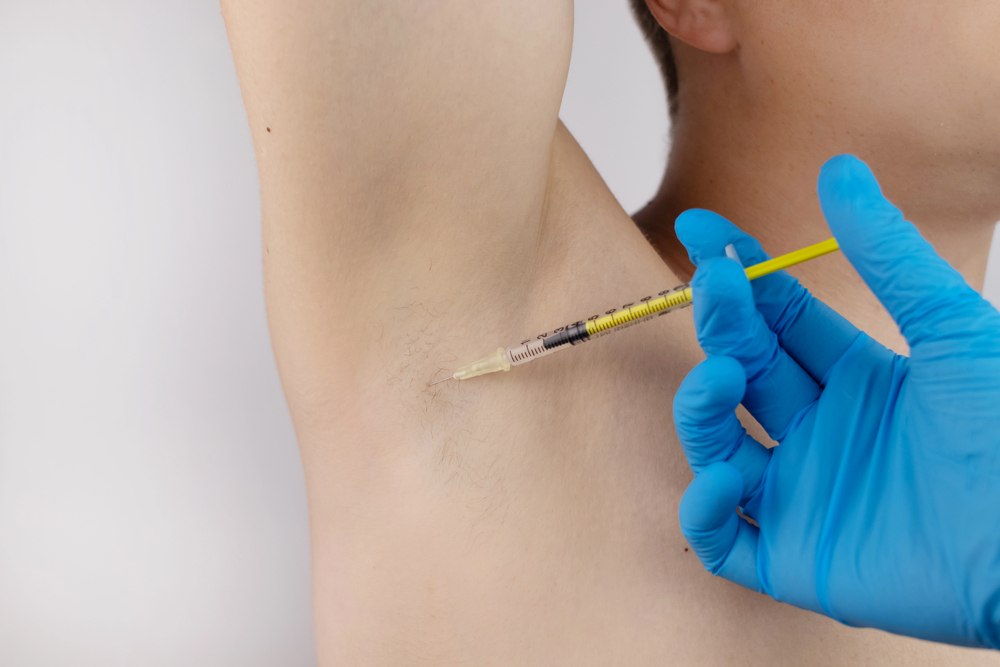
Injections for excessive sweating
- Used in medical settings to temporarily reduce sweat gland activity
- Most commonly used for excessive underarm sweating
- Results are temporary and vary between individuals
- Effects typically last several months
Note: The suitability of this treatment depends on individual circumstances and requires a medical consultation.
Prescription medications
- Certain oral medications may be prescribed to help reduce generalised sweating.
- More commonly considered when multiple areas are affected.
- Potential side effects should be discussed with a prescribing doctor.
Iontophoresis
- Uses a mild electrical current applied through water
- Commonly used for palms and soles
- Requires multiple sessions, with results building gradually over time
LED light therapy or energy-based treatments
Some clinics offer non-invasive therapies that aim to support skin health or comfort. Evidence for sweat reduction varies, and suitability should be discussed with a qualified practitioner.
Why see a clinician?
A healthcare professional can:
- Help determine whether sweating is primary or secondary
- Assess for underlying medical conditions
- Discuss appropriate, individualised management options
- Ensure treatment decisions are safe and clinically appropriate
How Long Do Excessive Sweating Treatments Last?
- Anti-wrinkle injections: typically 4–9 months (varies by individual and treatment area)
- Iontophoresis: ongoing sessions required; effects develop gradually
- Prescription medication: requires ongoing use as prescribed
- Lifestyle adjustments: require consistent, long-term habits
Prevention Tips for Everyday Life
Daily strategies that may help reduce sweat build-up include:
Wearing loose, breathable clothing
Using absorbent underarm pads or moisture-wicking fabrics
Maintaining good hygiene and keeping skin dry
Limiting alcohol and caffeine where possible
Staying well hydrated
- Avoiding heavy or occlusive makeup if facial sweating is an issue
Final Thoughts
Excessive sweating is a common and recognised medical condition. While it may be influenced by genetics, hormones, stress, or environmental factors, there are evidence-based options available to help manage symptoms.
If sweating affects your comfort or daily life, consider speaking with a qualified health professional for assessment and guidance.
Important Notice:
This information is provided for educational purposes only and does not constitute medical advice or advertise prescription-only medicines. Individual suitability for any treatment must be determined through a comprehensive consultation with a qualified health professional, in accordance with Australian regulations.